
2025
Beach sculpture. A figure adrift, severed from the computer it once served.
SculptureVideo
New experiments popped in randomly. The only analytics collected are to identify humans and bots, and the country location. No cookies are collected.
Installation view · BRB at FACT Liverpool · 18 Sep – 6 Dec 2026
A group show with Ellie Hoskins and Livi Wilmore.
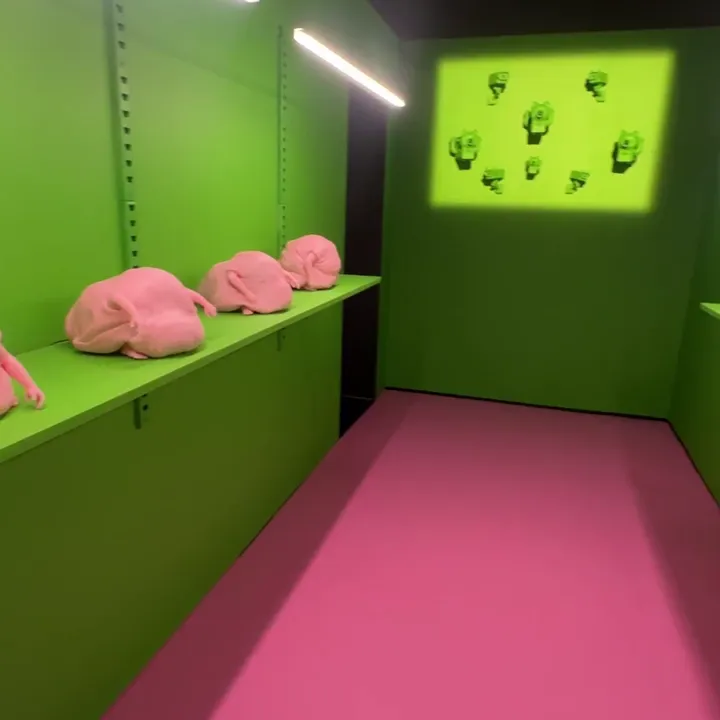
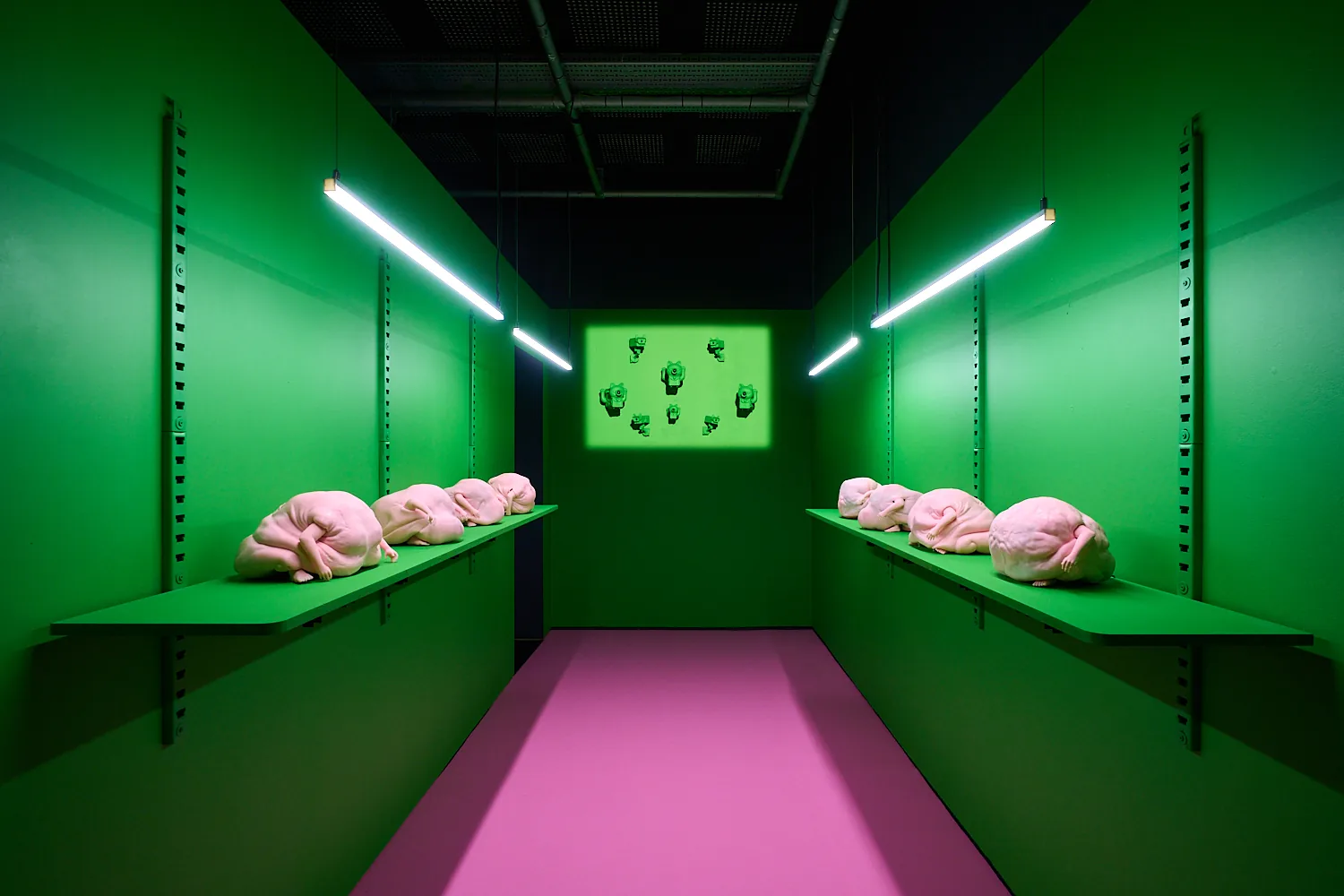
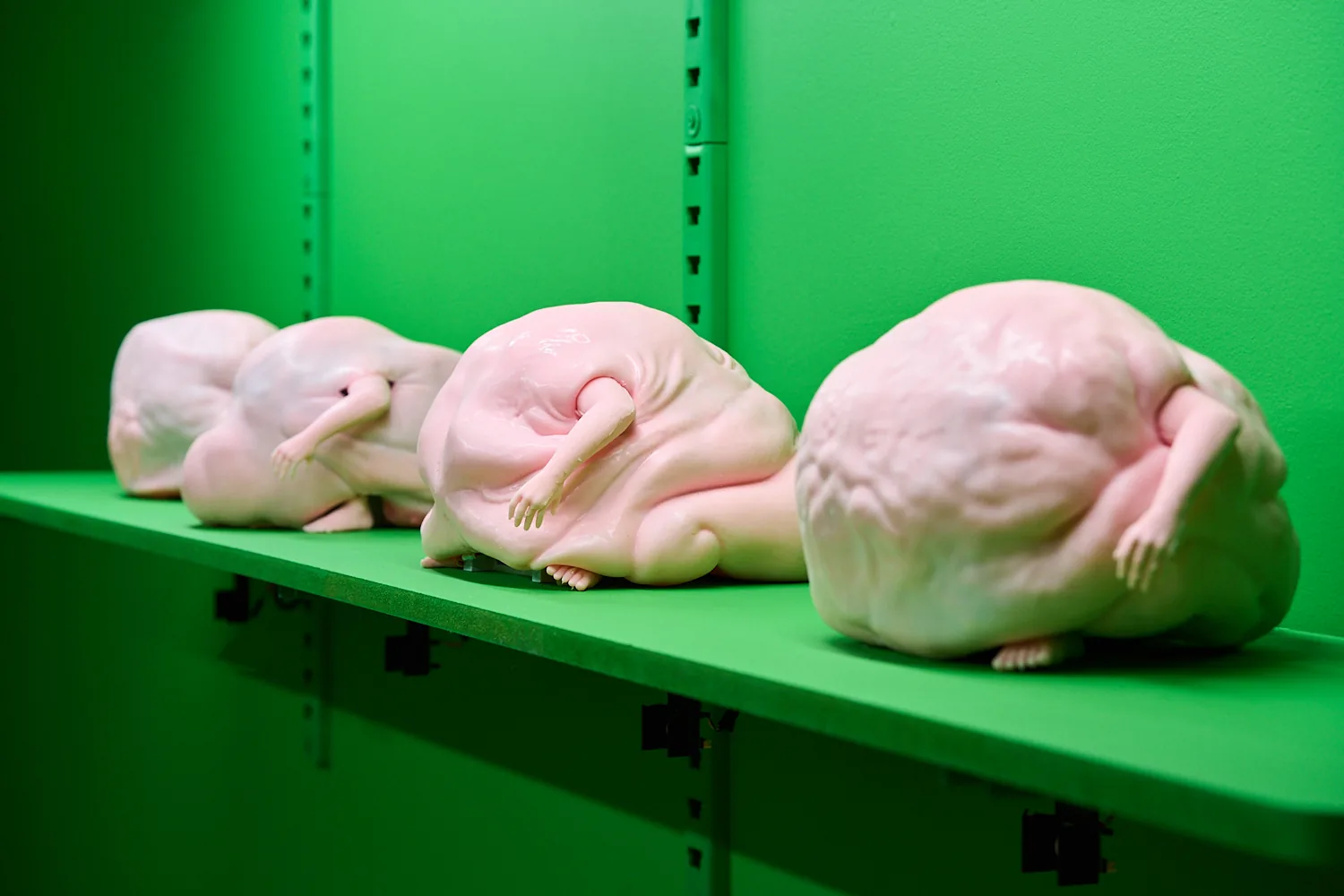
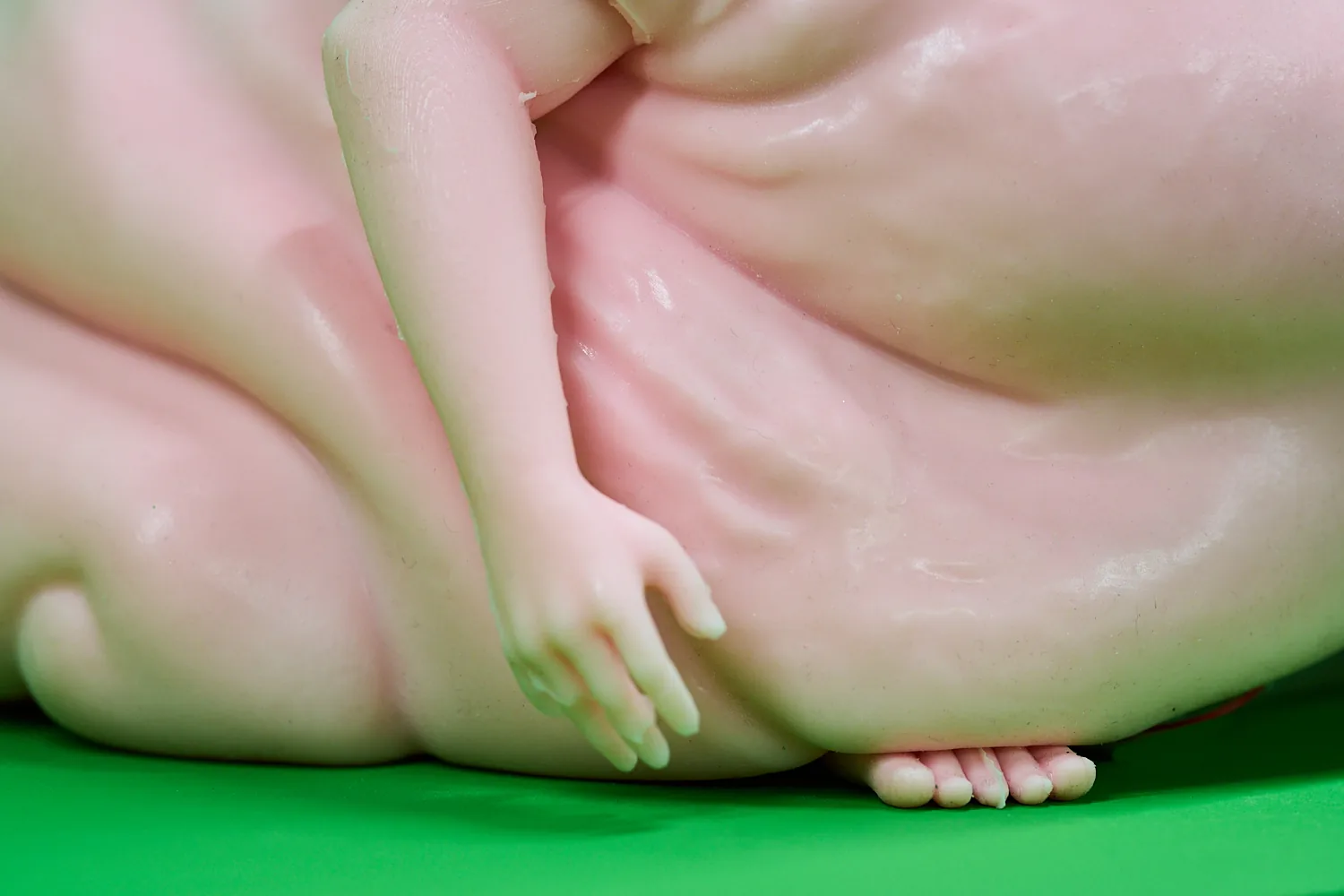
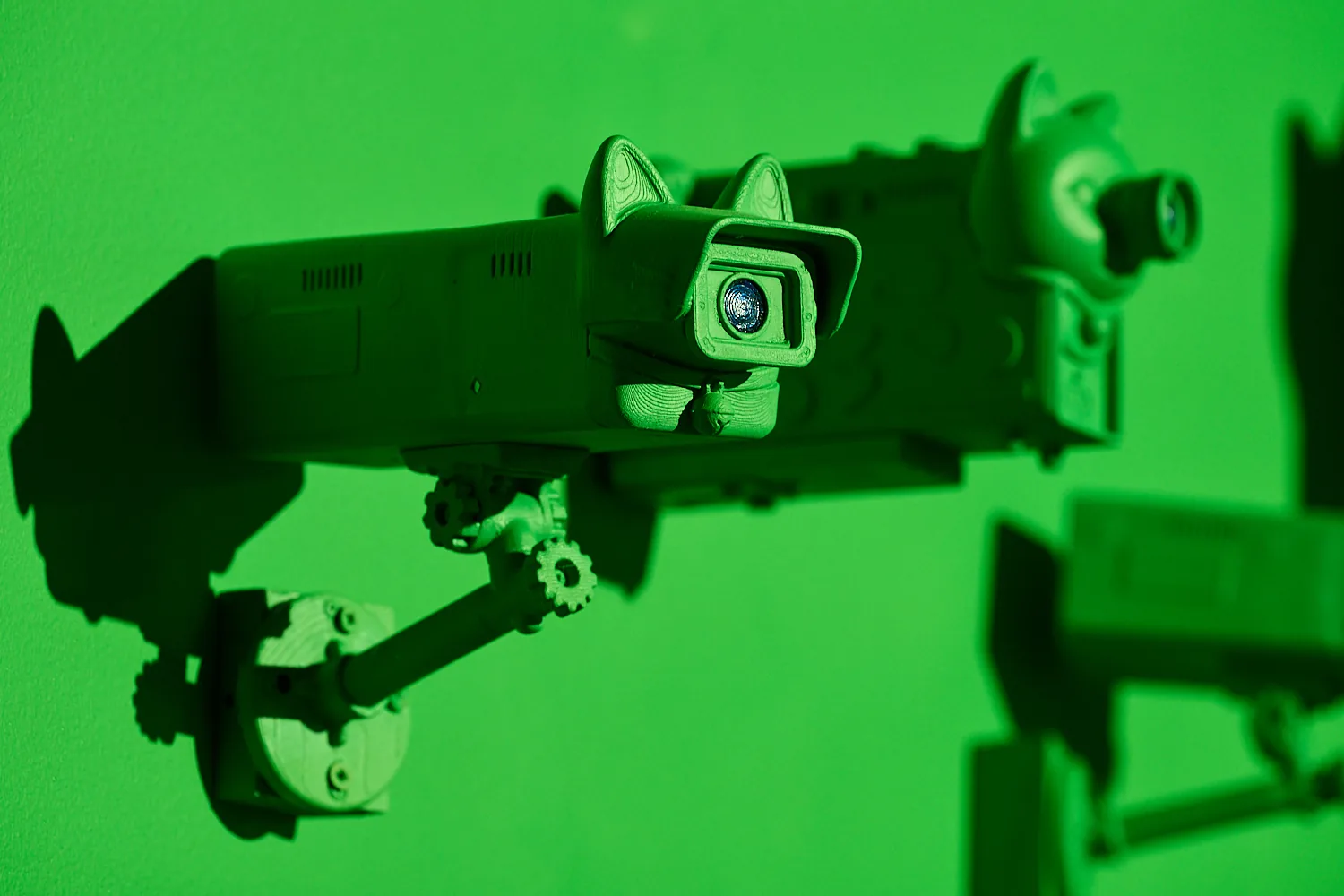
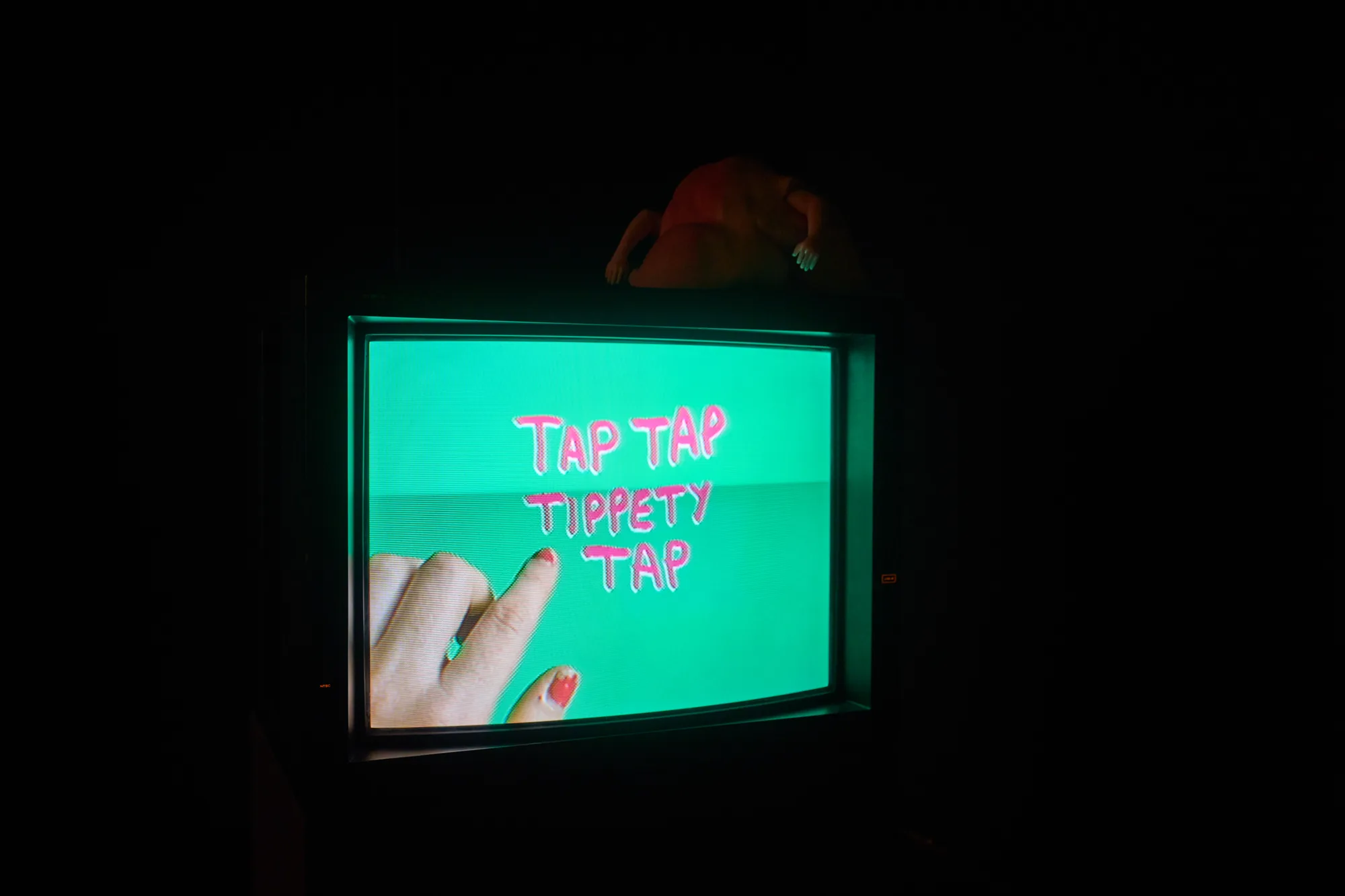
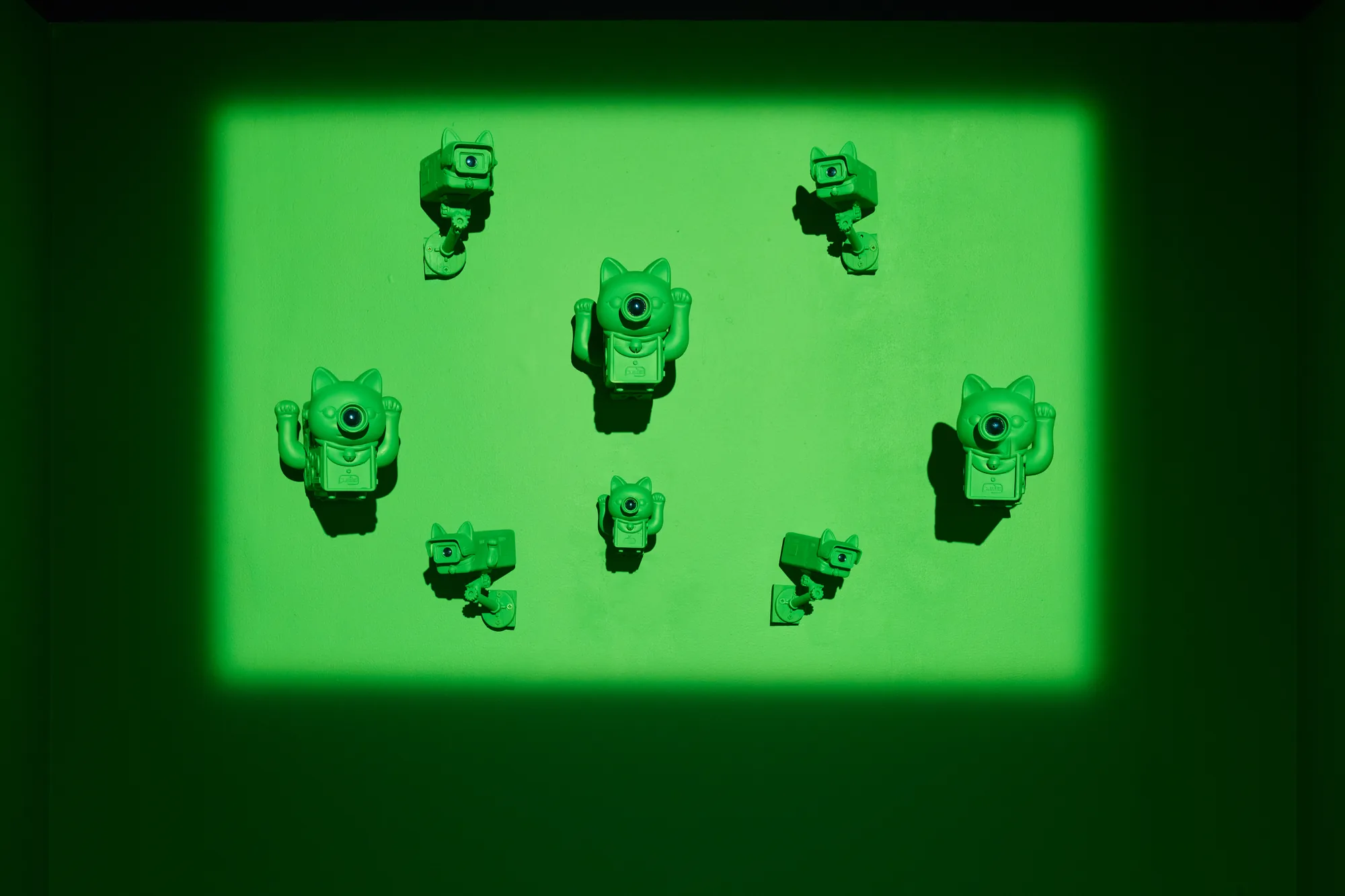
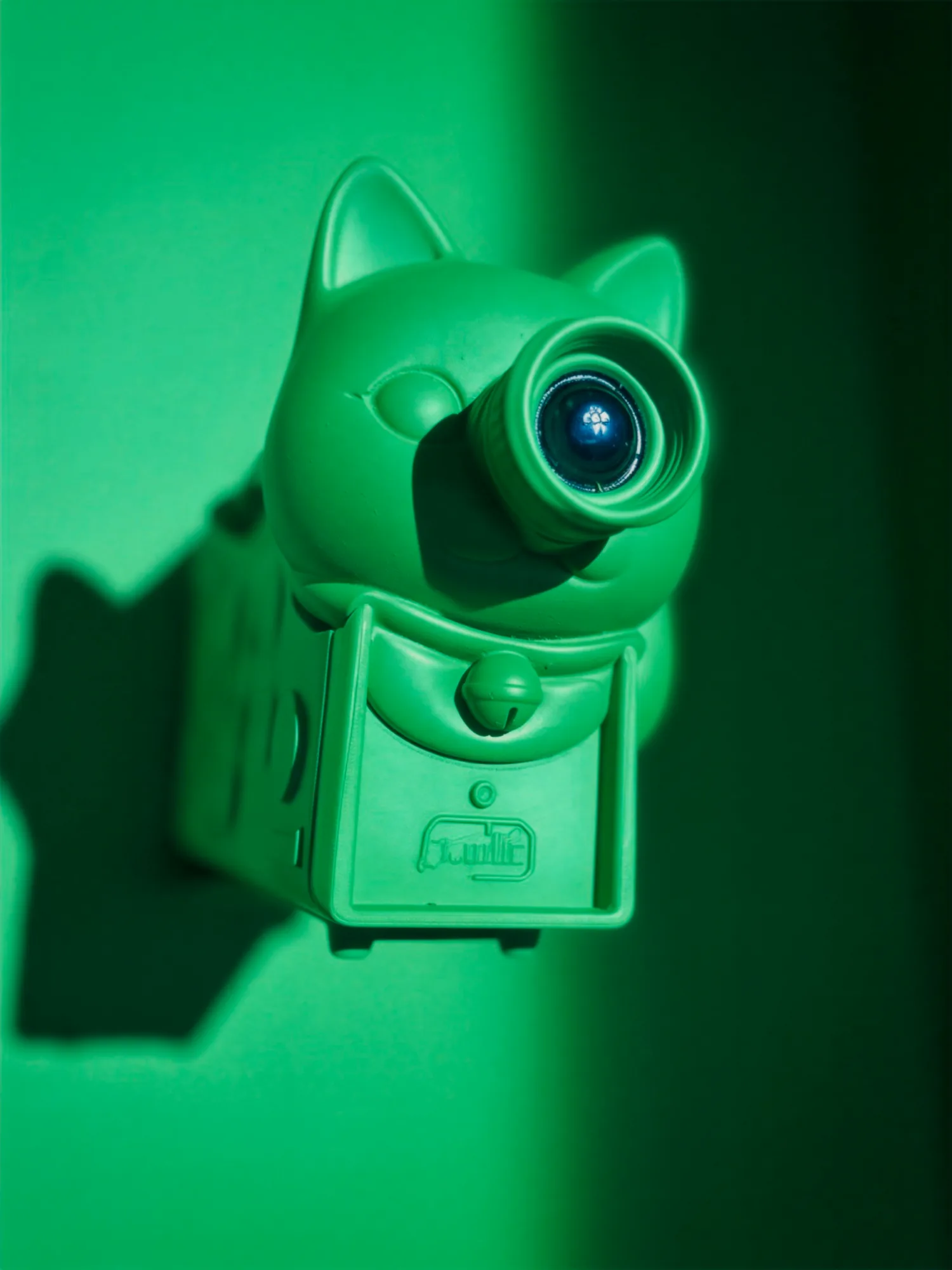
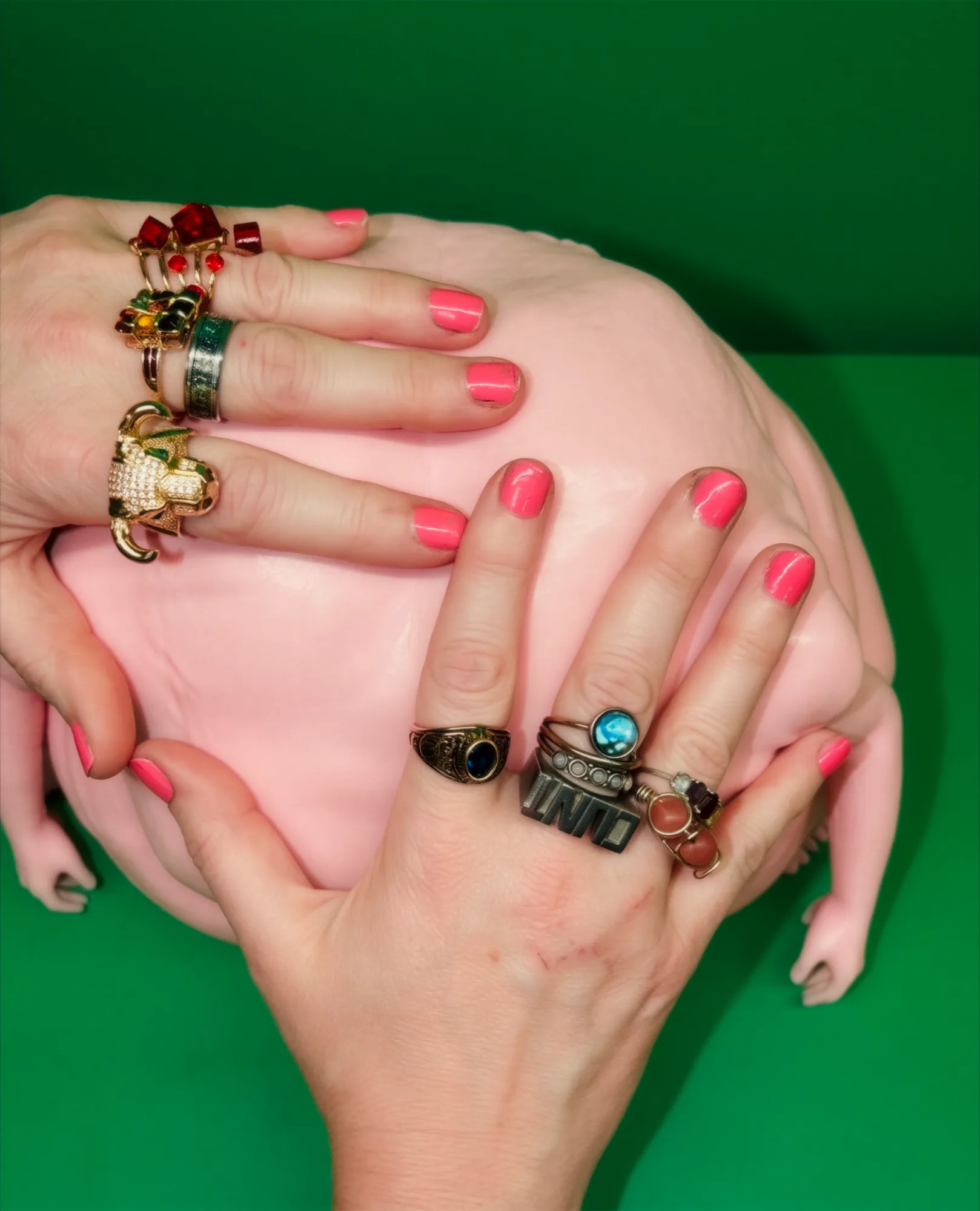
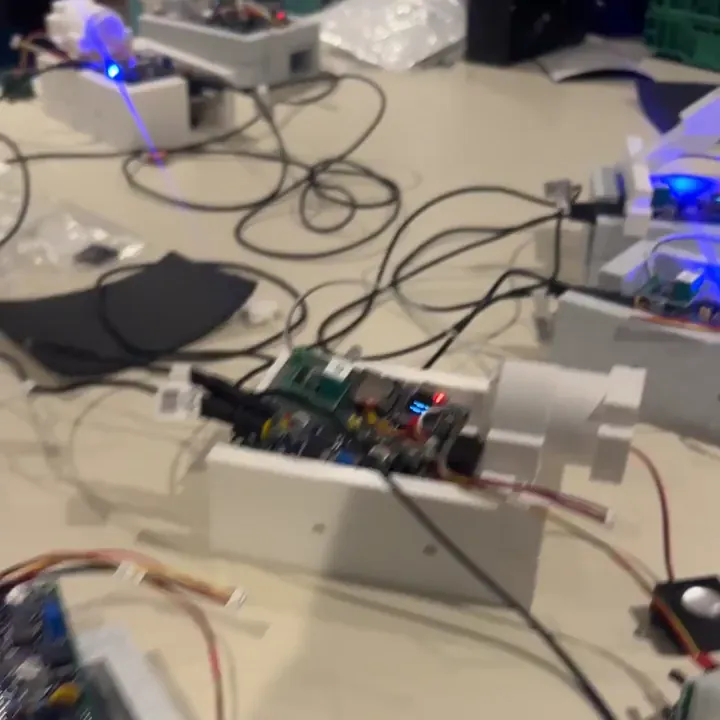
“BRB (meaning ‘be right back’) is internet slang used on early messaging platforms to indicate a temporary step away from the screen. Today, that separation feels harder to find. […] Livi Wilmore transforms addictive digital platforms into a soft play centre for adult minds. Mrs Luva-Luva uses sculpture and film to question our agency and sense of self in a world where personal data is a lucrative commodity. Ellie Hoskins’ towering rollercoaster captures the mania and mundanity of contemporary existence.”
— from FACT Liverpool’s page for BRB
Photography by Rob Battersby, except the hands by @planetbextacyphotography
Electronics support by Gareth Davies
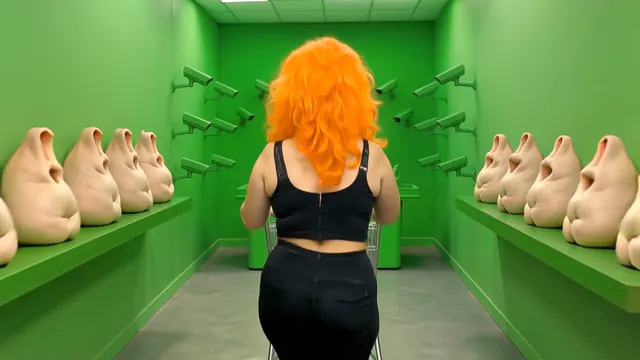
February 2026 · Film

A woman accidentally turns herself into a homogenous lump, which is harvested by Lucky Cat to be sold at the LLM supermarket. The film playfully addresses the changing human psyche under late capitalism, where emotions are commodified as brand content, identities flatten into meme-like simplifications, and our data becomes a tradable commodity.
Brainfood · VPRO × Herc Amsterdam · 2023 & 2024
Made in Cinema 4D and Redshift: art, modelling, texture and animation.
“We want to counter mediocrity in a gloomy world.”
Diederik Hoekstra, head of public and marketing at VPRO, at the Brainfood campaign launch, May 2023

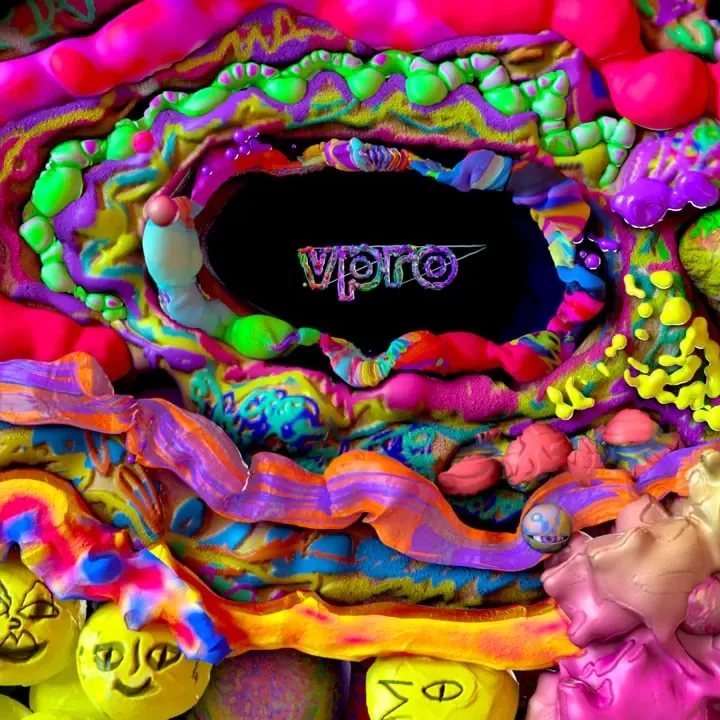
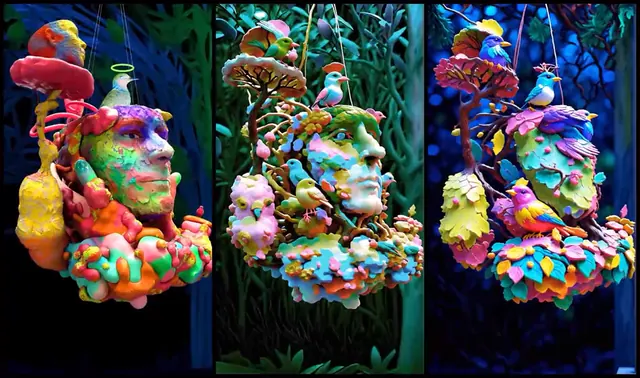
Brainfood was VPRO’s brand campaign, built around the digital 3D painted sculptures I was making at that time, just before the world went properly bananas. Its advert promoting the channel ran on TV across the Netherlands in 2023, introducing VPRO to a younger audience, and a follow up campaign ran in 2024. To go alongside it I made two idents. The campaign also appeared at IDFA and Dutch Design Week.
I’d started making ceramics and worked to get every texture as close to handmade as I could, so the 3D work feels tactile, like you could stroke it. 3D modelling, texturing and animation is quite a rigid, detail orientated craft, and I’d wanted it to be something looser and more immediate, like ceramics.
At Lowlands my 3D head was turned into a giant inflatable. I ran a face painting stall next to it, ‘Face the Chaos with a Face of Chaos’, painting festival goers with a load of messy, chaotic paint over their faces as a talisman to shield them from the forthcoming chaos. Matching like with like and hopefully neutralising it. If we can’t be categorised, boxed in and neatly identified, we’re more difficult to package up and sell on as our digital selves. I’m pretty sure this works, but it’s difficult to tell beyond personal experience as there weren’t that many people wanting to walk round the festival with their faces covered in chaos.
Birds flying high, you know how I feel Sun in the sky, you know how I feel Breeze driftin’ on by, you know how I feel It’s a new dawn It’s a new day It’s a new life for me, yeah It’s a new dawn It’s a new day It’s a new life for me, ooh And I’m feeling good Fish in the sea, you know how I feel River running free, you know how I feel Blossom on the tree, you know how I feel It’s a new dawn It’s a new day It’s a new life for me And I’m feeling good Dragonfly out in the sun you know what I mean, don’t you know? Butterflies all havin’ fun, you know what I mean Sleep in peace when day is done, that’s what I mean And this old world, is a new world And a bold world for me, yeah-yeah Stars when you shine, you know how I feel Scent of the pine, you know how I feel Oh, freedom is mine And I know how I feel It’s a new dawn It’s a new day It’s a new life for me I’m feeling good
“Feeling Good” Words and Music by Anthony Newley and Leslie Bricusse. © 1964 (Renewed). Recorded by Nina Simone, 1965. All Rights Reserved.
“Let us be lovers, we’ll marry our fortunes together, I’ve got some real estate here in my bag” So we bought a pack of cigarettes and Mrs. Wagner pies and walked off to look for America. “Kathy,” I said as we boarded a Greyhound in Pittsburgh, “Michigan seems like a dream to me now.” It took me four days to hitchhike from Saginaw. I’ve gone to look for America. Laughing on the bus, playing games with the faces. She said the man in the gabardine suit was a spy. I said, “Be careful, his bowtie is really a camera.” “Toss me a cigarette, I think there’s one in my raincoat.” “We smoked the last one an hour ago.” So I looked at the scenery, she read her magazine and the moon rose over an open field. “Kathy, I’m lost,” I said, though I knew she was sleeping. “I’m empty and aching and I don’t know why” Counting the cars on the New Jersey Turnpike. They’ve all come to look for America. All come to look for America. All come to look for America.
“America” Words and Music by Paul Simon. © 1968 (Renewed) Paul Simon Music. All Rights Administered by Sony Music Publishing. International Copyright Secured. All Rights Reserved.
September 2026 · Web art · live
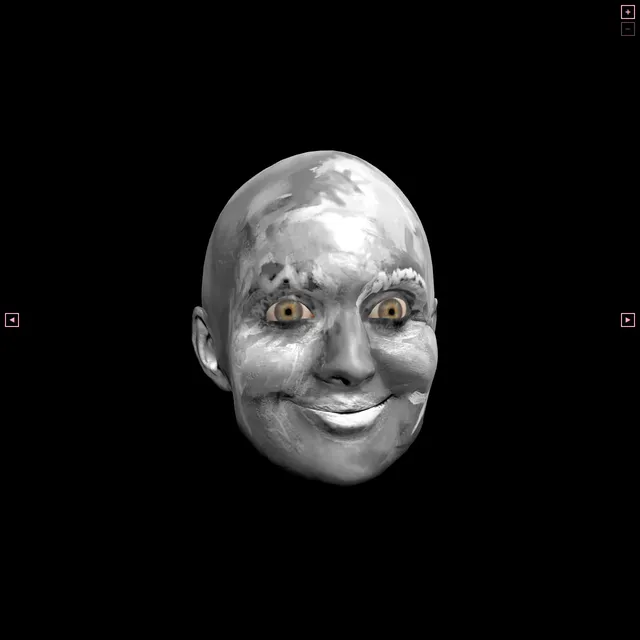
Web art. Every visit to this site as it happens, bots and people flying onto a 3D head from wherever in the world they came.
May 2025, MFA Final Show · Sculpture · Video

Automated sculpture. Ten wax heads, hoovering up metaphorical resources.
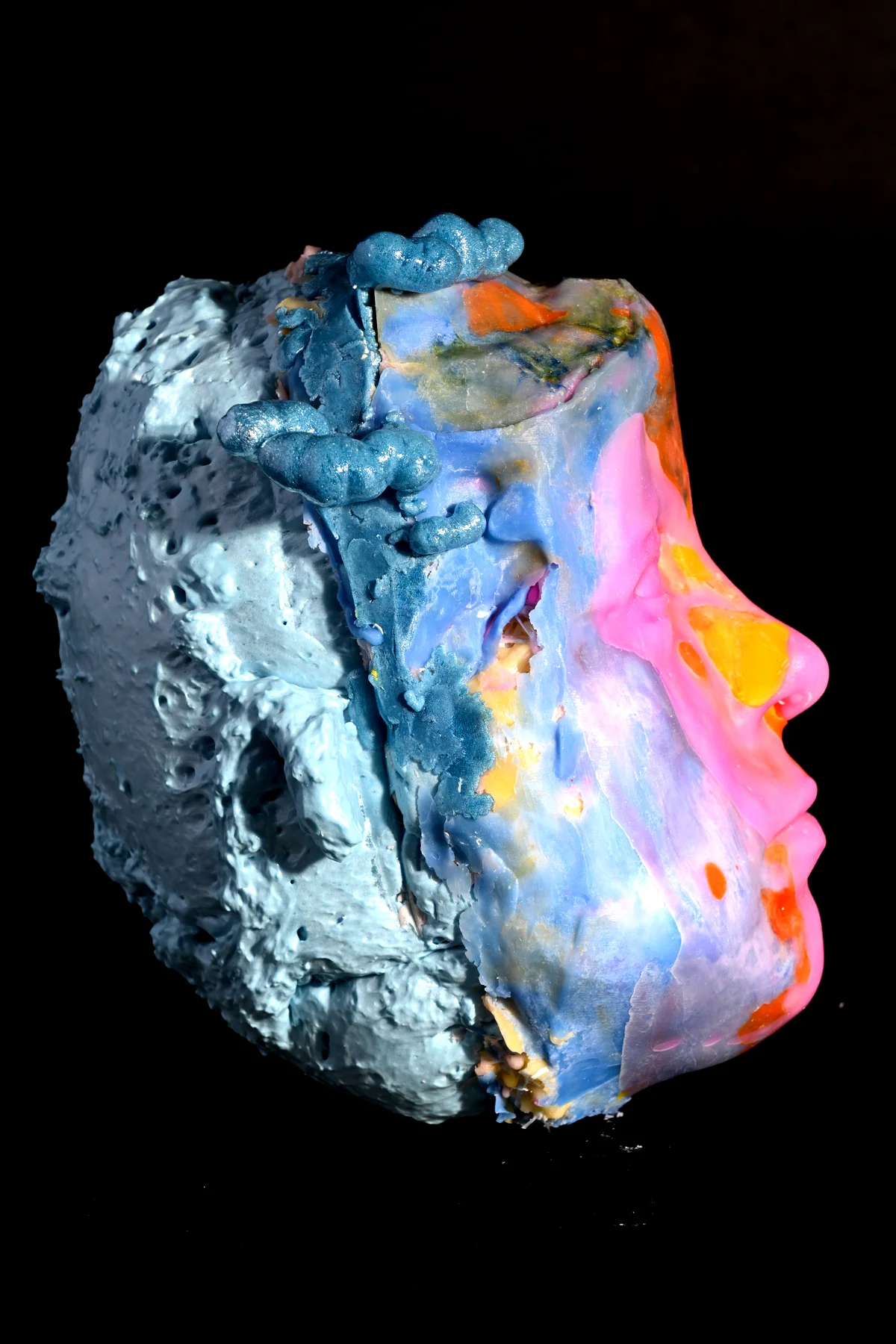
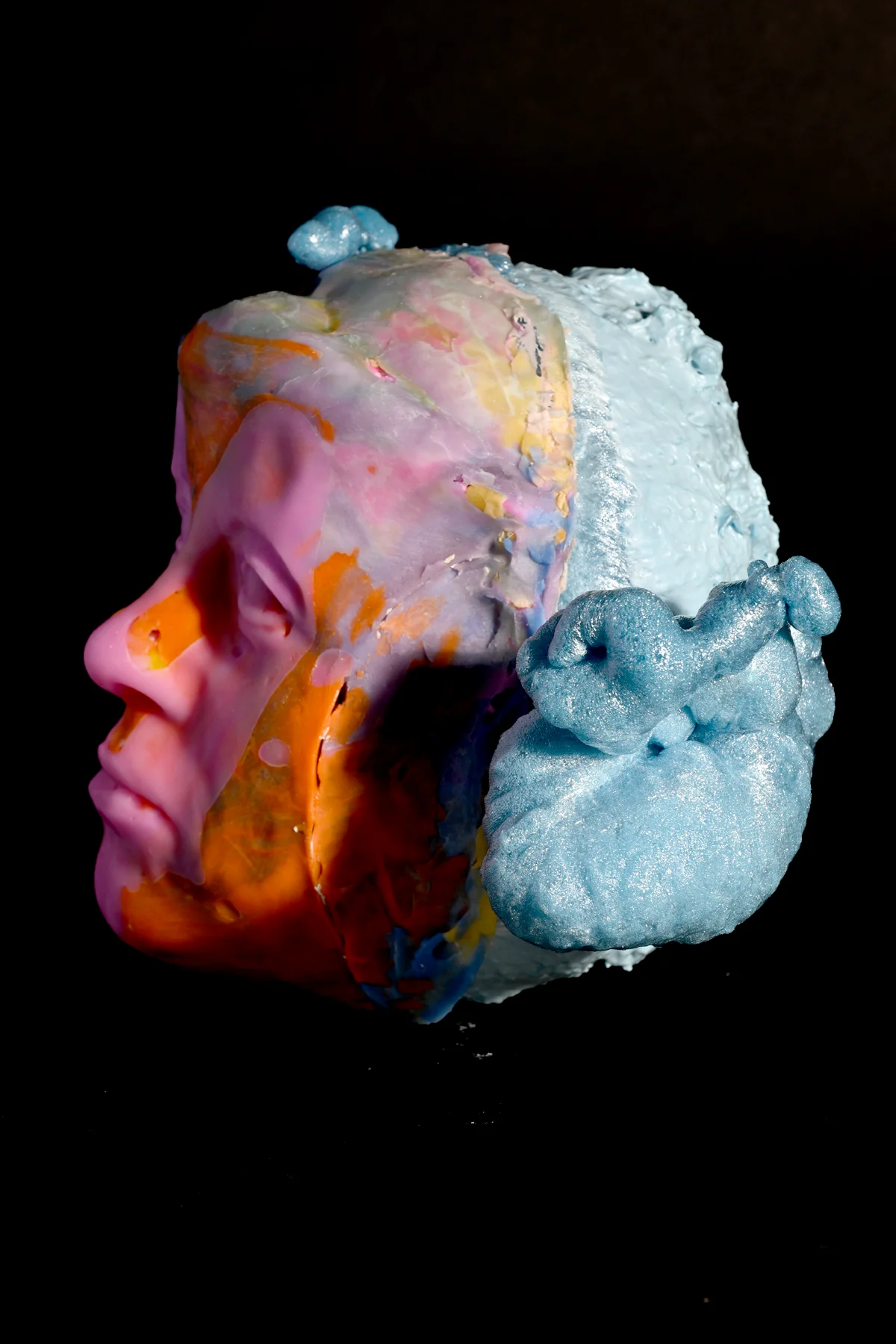
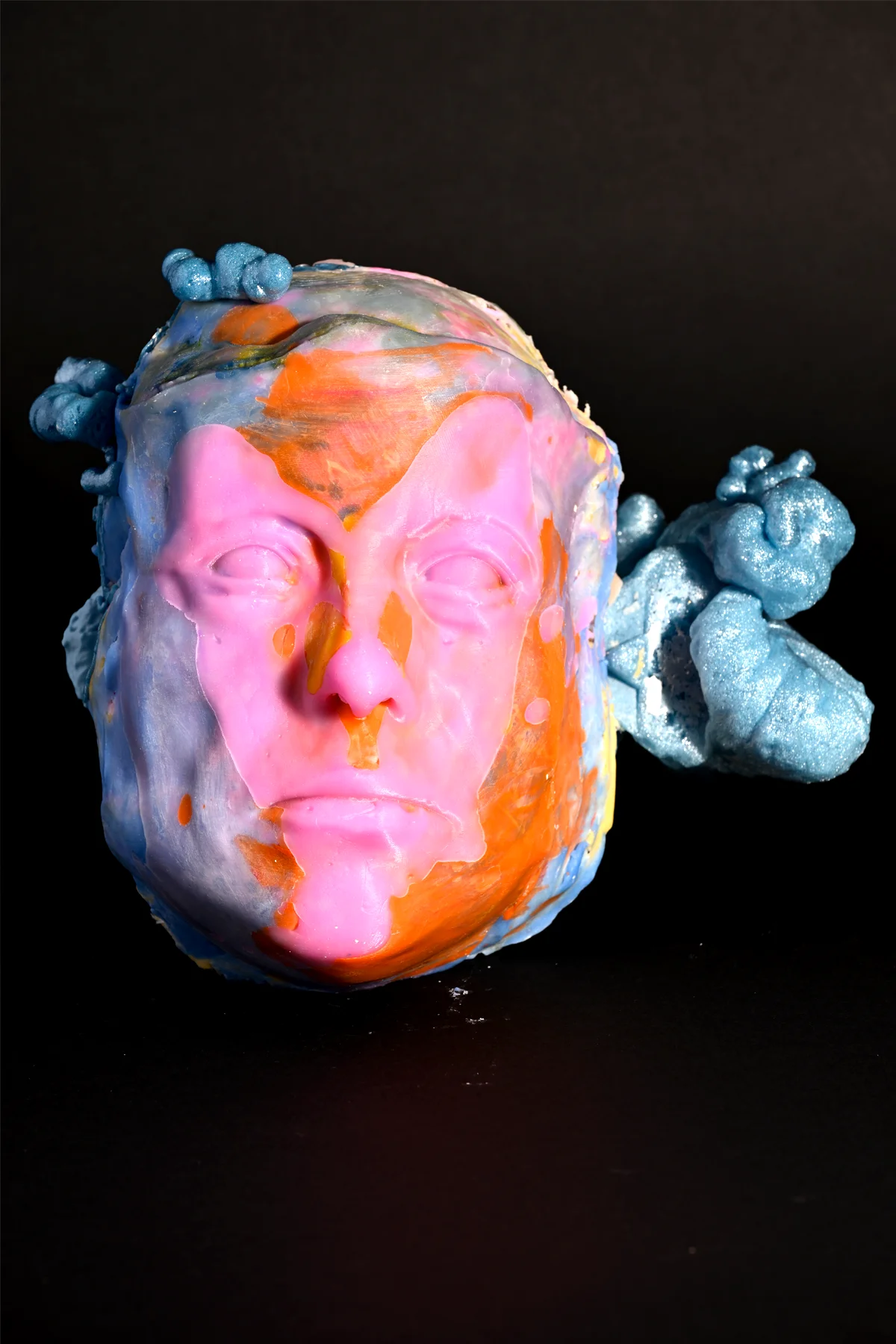
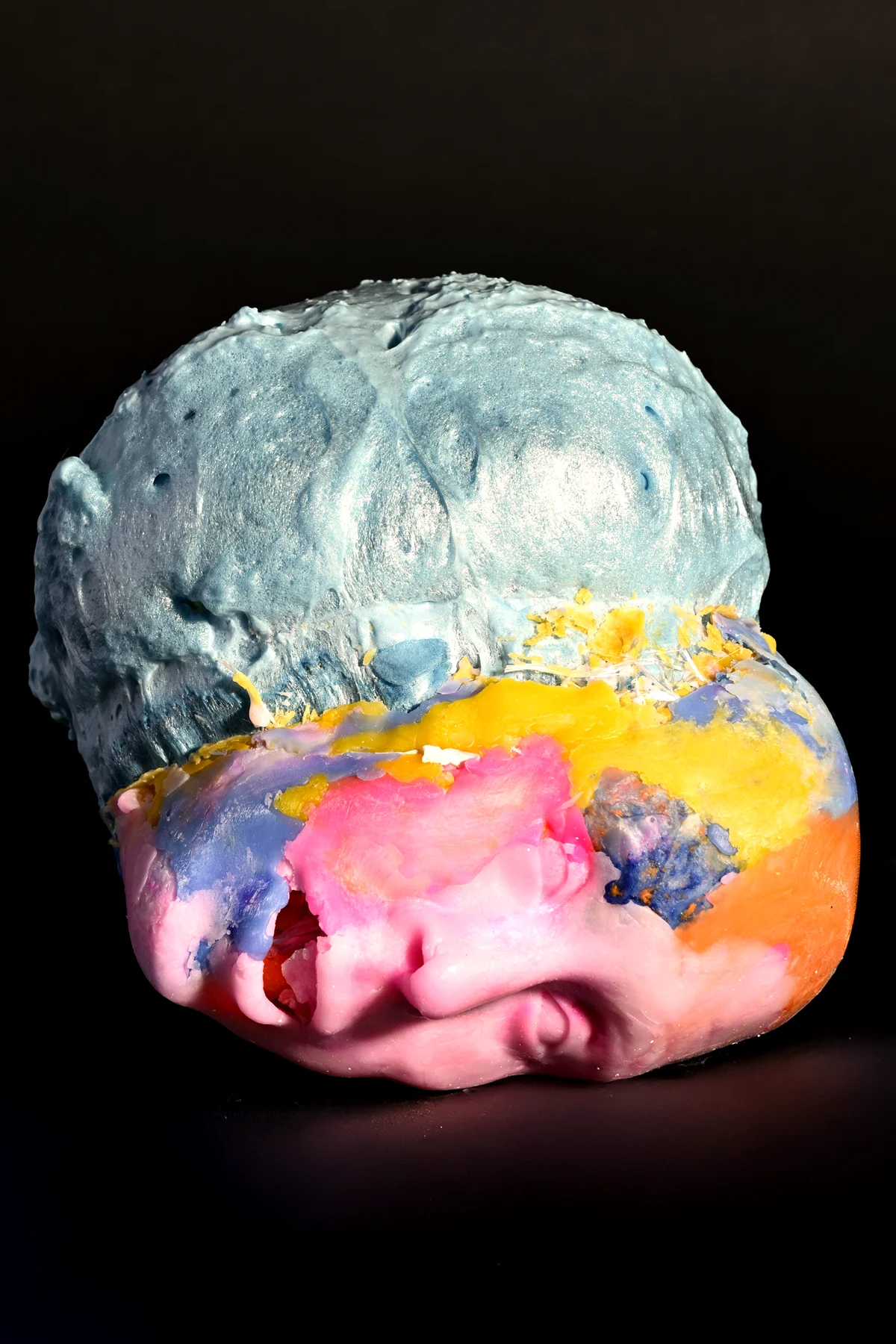
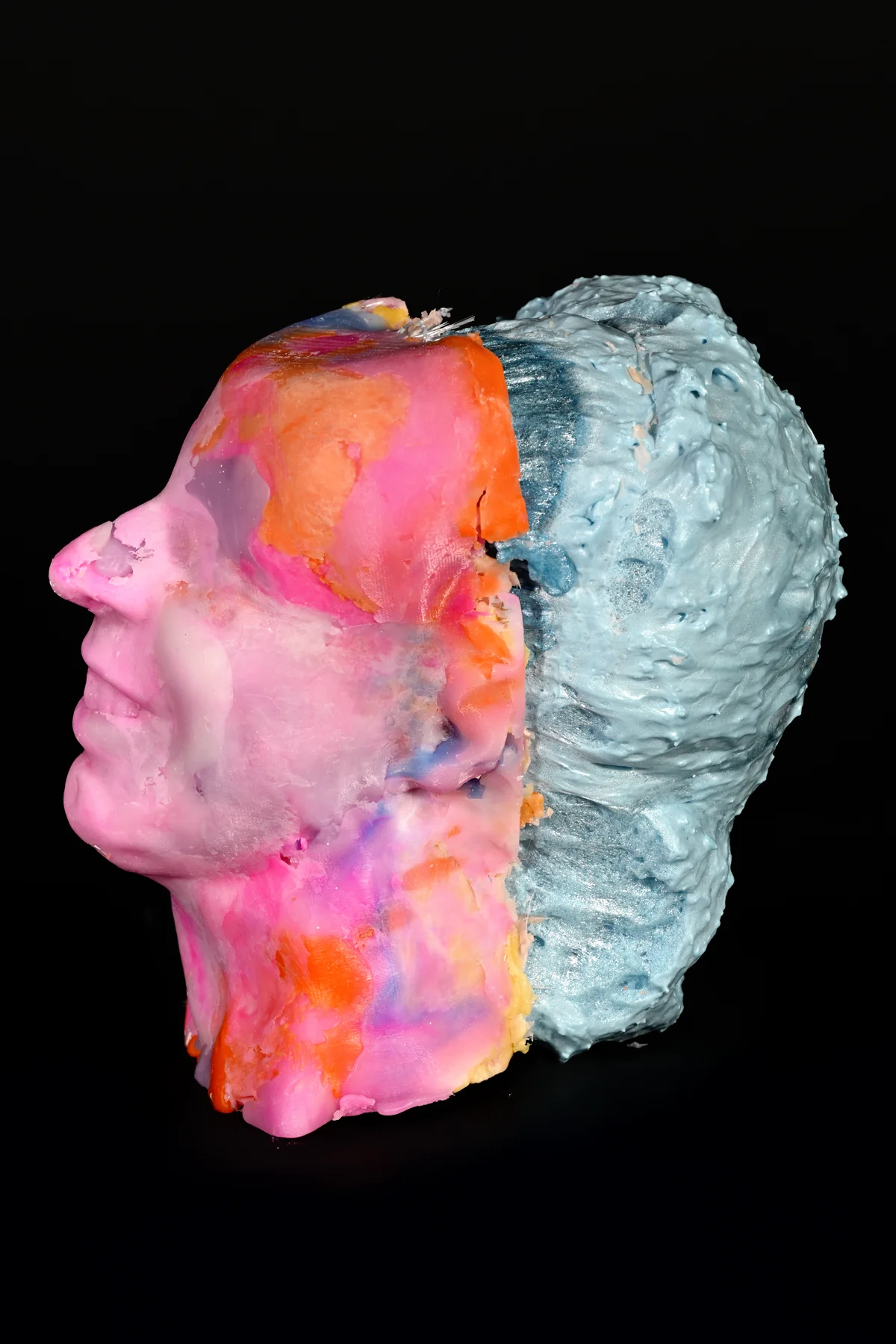
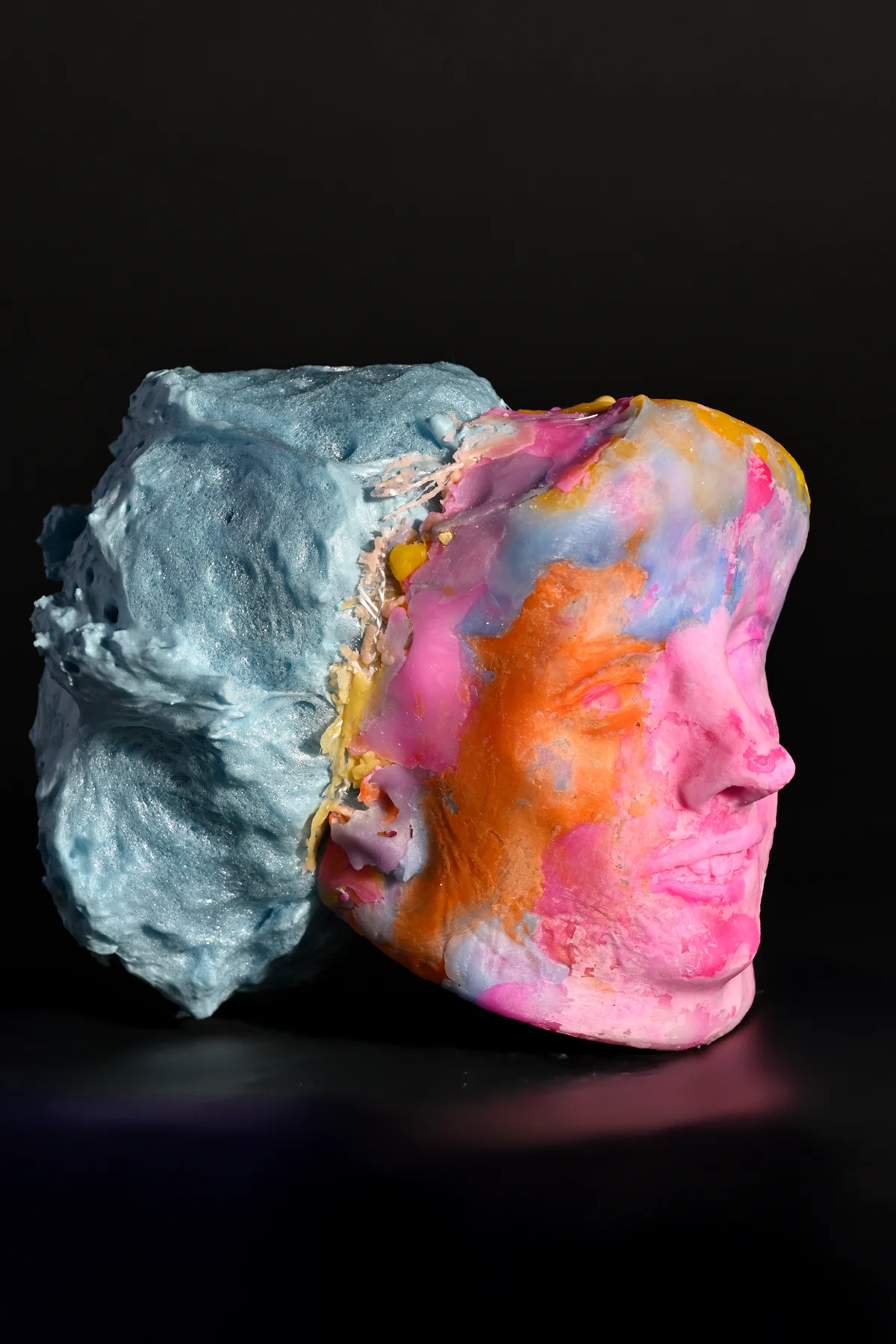
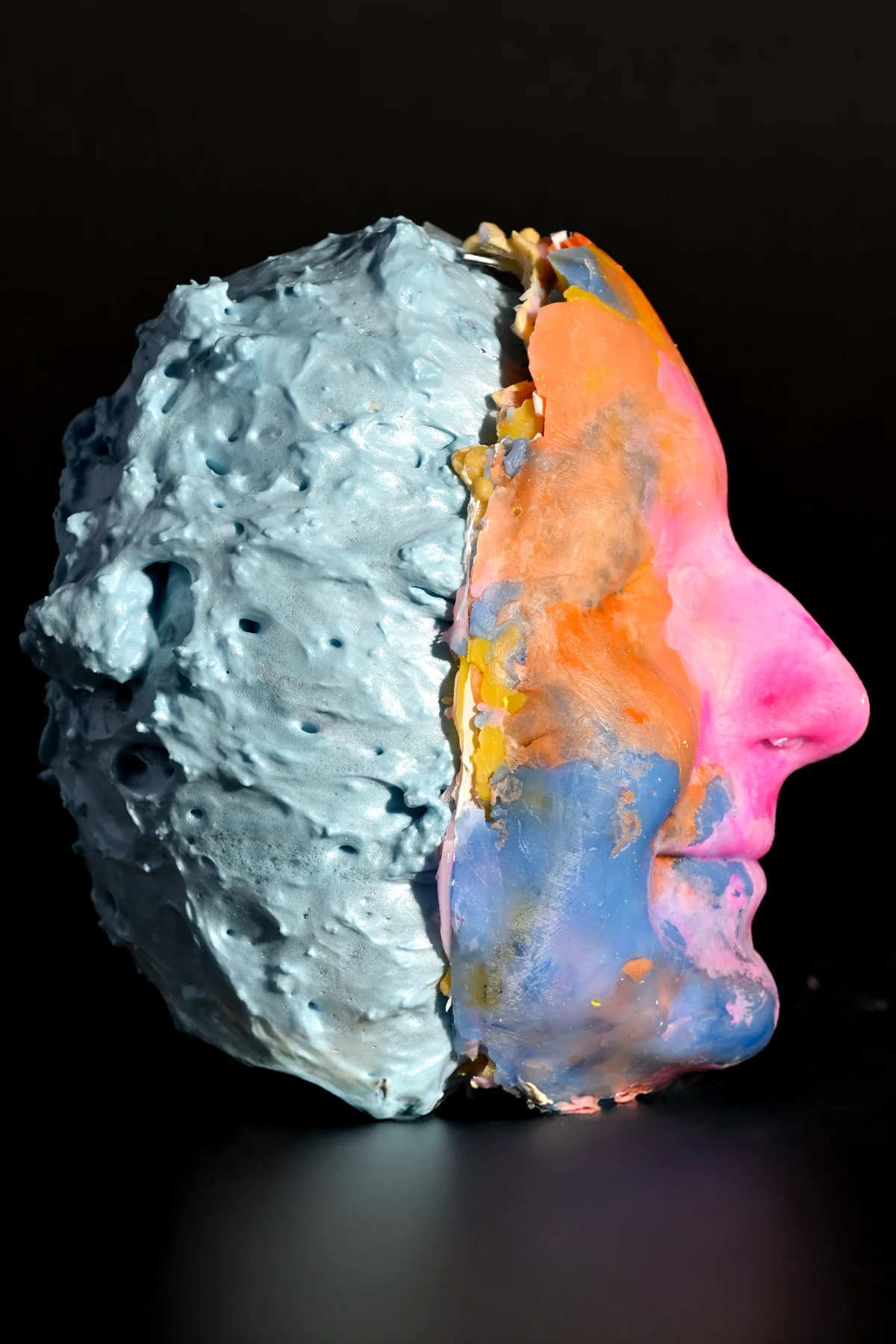
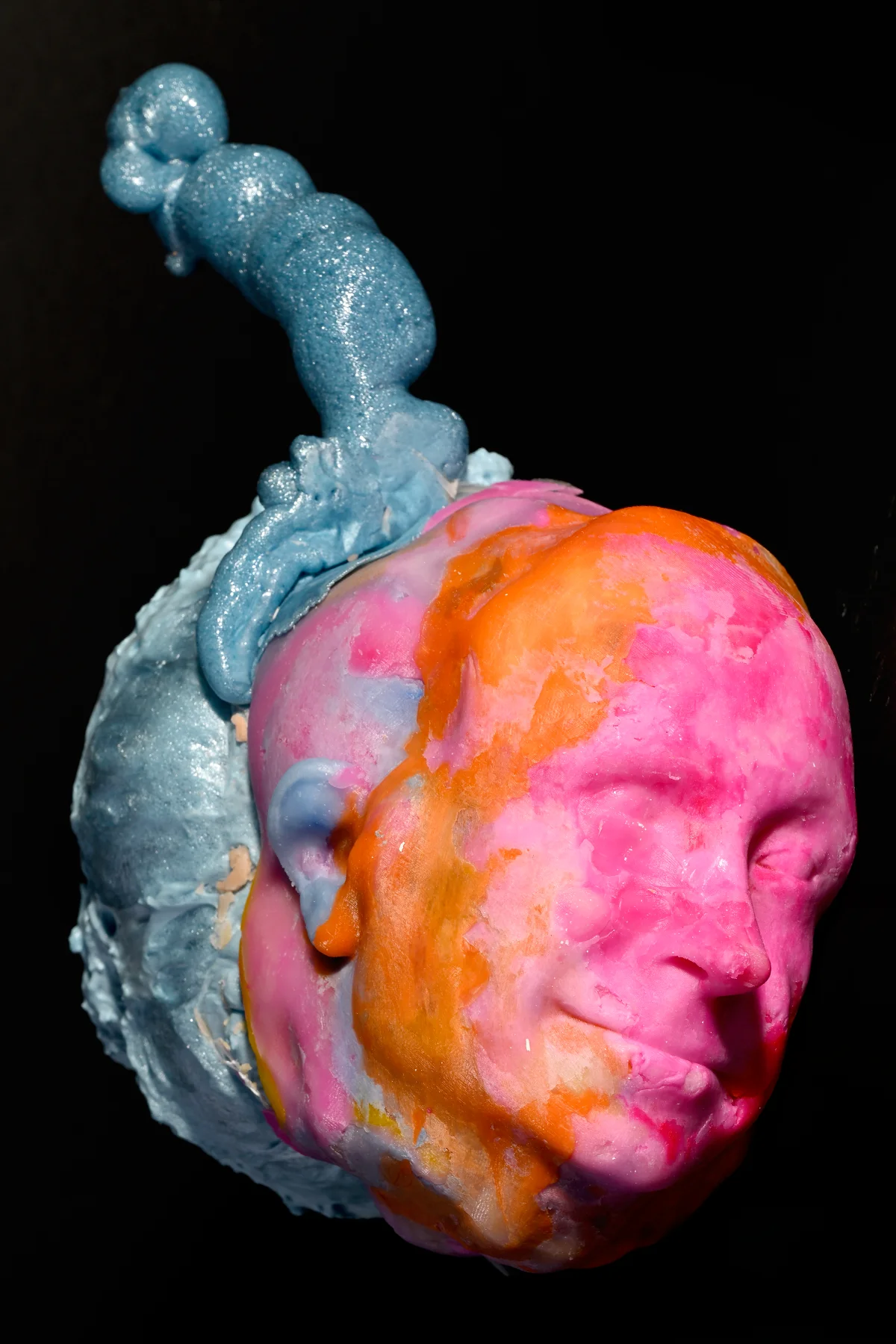
Cordyceps, 2025 · Beeswax, expanding foam · Cast from silicone mould of 3D printed Blender sculpture · 40 × 20 × 20 cm