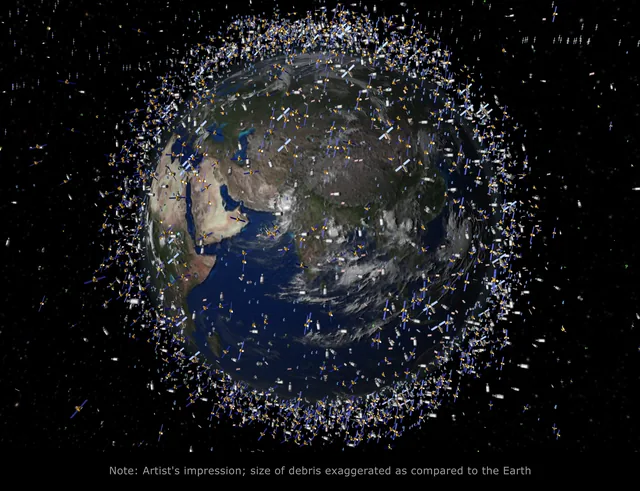
Nice one if you’re a human and you’ve made it here. you’re massively outnumbered by the robots. They are search engines, ai crawlers gathering training data, marketing tools and security scanners, scraping, filing, shuffling. It’s like the space junk floating above our heads. There’s way more junk up there than working satellites, circling, stuck on a loop.
More than half of all working satellites belong to Starlink (Musk), the main reason low orbit is getting overcrowded. Amazon is launching its own network. The same companies host bots. Many of the scanners hunting for passwords on this site run on servers rented from Amazon and Google.
Making the bots
While on a residency at The Hugo Burge Foundation I sat in their beautiful glass house and painted bots, which you now see stuck to my head.









coming from
No tracking of people
This site sets no cookies and never keeps anyone’s IP address. The only things it collects are what this piece shows. For a person that’s three things: that it was a person, which country it came from, and the minute of the visit (not which page). There are no other analytics and no tracking tools. A visit shows one mark with a country on it: no name, no city, no device, no time on the page, no route through the site, no record of where you came from. A visit only counts as a person once someone touches the screen, moves the mouse, scrolls or presses a key on the page (programs rarely do); the page only notes that it happened, not where, what or how much. So that one person isn’t counted again on every page, your browser keeps a note of the week it was last counted, in its own storage; the note is never sent anywhere, and later pages that week count as page views, not as another person. What this piece studies is the bots. For programs (never people), it also notes which organisation’s network their address belongs to, by comparing the address with a free public list kept on this site; the address itself is never kept or sent anywhere. If a program says which site sent it, the name of that site is kept too (just the site, never the full address); for people it isn’t. For security scanners (programs hunting for password files and the like) it also notes the name they gave themselves and which cloud company’s servers they ran on.